If you hold USDT, Bitcoin or another coin and want naira, you have more options in 2026 than ever. That is the problem. Every app claims the “best rate” and “instant payout”, and the differences that actually decide how much naira you end up with — fees, how the rate is set, who you are trading with, and how fast you can get the money out — are buried in the small print.
This guide compares the main ways Nigerians sell crypto for naira: direct-conversion apps like Mabro, Breet, Monica and Spenda, and peer-to-peer (P2P) marketplaces like Bybit P2P. It explains what to check before you choose, and where each option fits.
The short answer
For most people cashing out amounts they cannot afford to have frozen, a direct-conversion app is the safer choice: you sell to the platform, not to a stranger, and the naira you will receive is shown before you confirm. P2P can sometimes show a slightly higher headline rate, but it carries risks a direct app removes: the buyer who never pays, the “bad naira” that gets your bank account restricted, and the hours spent waiting for a counterparty.
Among direct apps, the deciding factors are the fee, whether the quote you see is the amount you get, and how quickly you can withdraw.
How the main options compare
The table below summarises what each platform publishes about itself, as checked in November 2026. Platforms change their fees and features, so confirm the current figures in each app before you sell.
| Before you sell | Mabro | Breet | Monica | Spenda | Bybit P2P |
|---|---|---|---|---|---|
| Type | Direct conversion | Direct conversion | Direct conversion | Direct conversion | Peer-to-peer marketplace |
| Fees | 0% to convert | 0.5% to 1.5% per transaction | $2 network fee on BTC | 0.9% across all assets | Deposit and transfer fees apply |
| Rate | Live rate shown before you confirm | Transparent, fees stated | Calculator and in-app rates may differ | Fixed rates updated every 30 mins, less fees | Set by each vendor |
| Payout speed | Credited to your crypto wallet in US dollars on confirmation; swap to naira instantly when you choose; bank withdrawals in seconds | 1 to 5 minutes | Claims under 60 seconds | Similar to Breet | Minutes to days, depending on vendor |
| Counterparty risk | None — you sell to Mabro | None | None | None | Bad-naira and frozen-account risk |
Mabro also does more than crypto: the naira lands in a wallet you can use for airtime to cash, data, electricity and cable TV, or send to any Nigerian bank. If all you ever do is sell crypto, that matters less; if you pay bills from the same money, it saves a step.
What actually decides how much naira you get
1. The fee, and where it hides
A fee can be charged three ways: as a percentage of the trade, as a fixed network fee, or inside the rate itself (the “spread” between the market rate and the rate you are offered). Two apps can both say “no fees” and pay very different amounts, because one has simply moved its margin into the rate. The only fair comparison is the final naira amount for the same coin and quantity, at the same minute.
2. Whether the quote is the payout
Some apps show a calculator rate on their website that differs from the rate in the app, or quote a rate that is recalculated after your coins arrive. Prefer an app that shows you the exact naira you will receive, for the amount you are sending, before you confirm — and credits that figure.
3. Who you are trading with
On a direct app you sell to the company. On P2P you sell to an individual, and your bank sees a deposit from a stranger. If that stranger’s naira is later tied to fraud, the receiving account — yours — can be restricted while it is investigated. We explain the mechanism in why P2P crypto trades get bank accounts frozen.
4. How fast you can use the money
“Instant” can mean the platform credits its own wallet instantly but the bank transfer takes longer, or it can mean the money is in your bank within seconds. Check both steps: time to credit, and time to withdraw.
5. Which coins and networks are supported
Most people sell USDT, and most USDT in Nigeria moves on TRON (TRC20) because it is cheap. Make sure the app supports the network you are sending from — sending on the wrong network can lose the funds. Mabro supports USDT, USDC, BTC, ETH, LTC, BNB, SOL and TRX.
Direct conversion vs P2P: when each makes sense
Choose a direct app when the amount matters to you, you want the naira quickly, and you do not want to deal with buyers, payment proofs or appeals. This is most people, most of the time.
P2P can make sense when you are experienced, you only trade with established merchants who have long, clean histories, you are selling an amount you can afford to have delayed, and you accept that a frozen account is a real possibility. Even then, a slightly better headline rate rarely compensates for a week without access to your bank account.
Red flags when choosing where to sell
- A rate far above everyone else’s. Market rates are public. A quote well above them is either bait or a scam.
- “Send first, we’ll pay after” on WhatsApp or Telegram. Legitimate platforms show you a deposit address inside a verified app; they do not ask you to send to a person.
- No identity verification at all. Nigerian platforms that handle naira are expected to verify users with BVN. A platform that skips it is cutting corners elsewhere too.
- No clear support channel. If something goes wrong mid-transfer you need a real person to reply.
How to sell crypto on Mabro
- Download Mabro, register and verify your BVN.
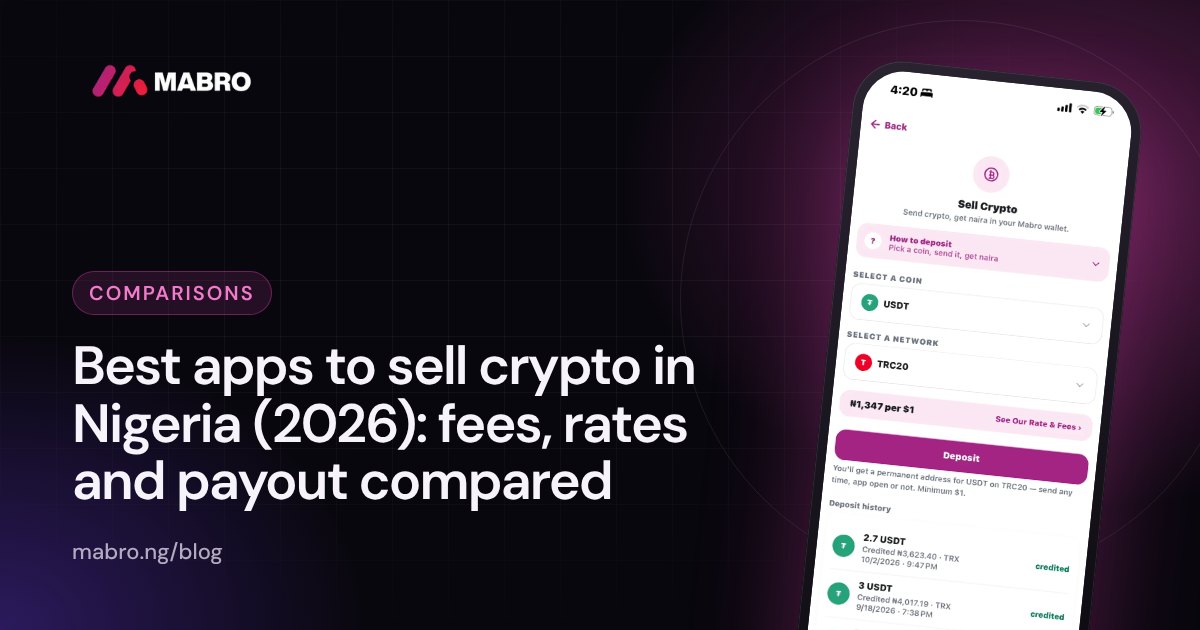
- Tap Sell Crypto, choose the coin and the network.
- Send the crypto to the deposit address shown in the app.
- Once it confirms, its value is credited to your Mabro crypto wallet in US dollars. Swap to naira whenever you choose — the exact naira is shown before you confirm — then spend it or withdraw to any Nigerian bank.
See the coin-by-coin guides for selling USDT, selling Bitcoin and selling Ethereum, or read how crypto to naira works on Mabro.
Frequently asked questions
What is the best app to sell crypto in Nigeria?
The best app is the one that pays you the most naira, for your coin and amount, with the least risk. Compare the final naira figure each app quotes at the same moment, and prefer direct-conversion apps over P2P if you want to avoid frozen-account risk.
Is it legal to sell crypto in Nigeria?
Yes. Nigerians can buy and sell crypto, and regulated platforms verify their users’ identity. Use a platform that asks for BVN verification and keep records of your trades.
Why is P2P sometimes cheaper?
P2P sellers compete on price and some quote above market to attract trades. The trade-off is counterparty risk: you are paid by an individual whose money you cannot verify.
How fast can I get naira after selling USDT?
On a direct app, the naira is credited once your USDT is confirmed on the network — usually minutes on TRC20. On Mabro, a confirmed deposit is held in your crypto wallet in US dollars; swapping to naira is instant, and withdrawals to a Nigerian bank arrive within seconds.