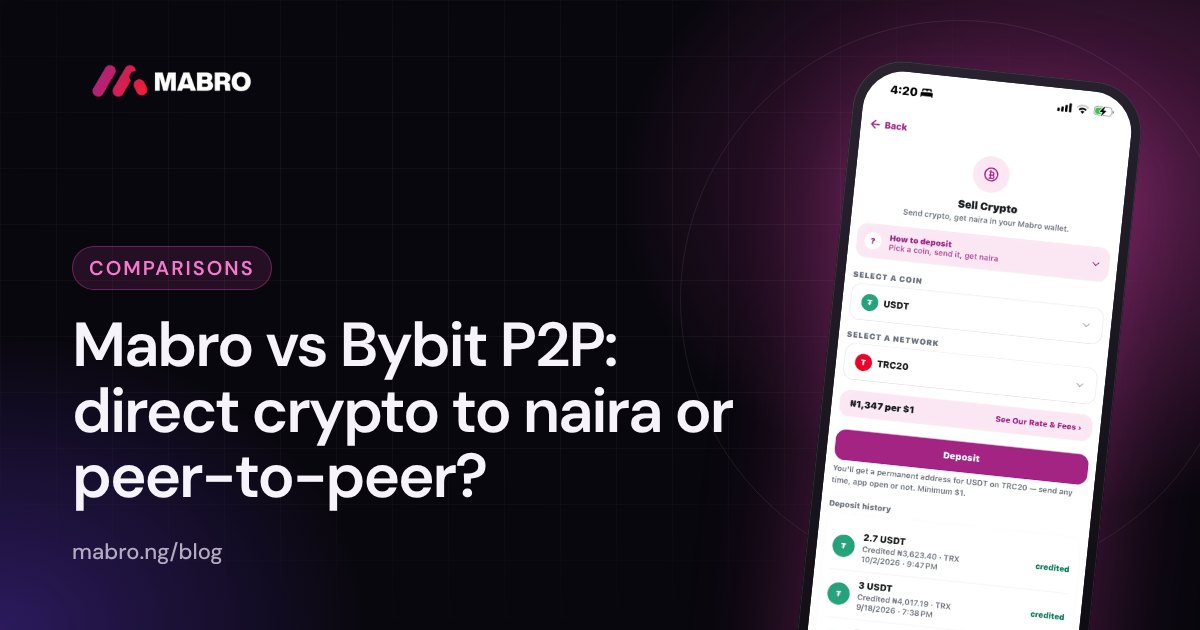
Bybit P2P is one of the most popular ways Nigerians turn USDT into naira. It is also the route behind most of the “my account was frozen after a crypto trade” stories. Mabro takes a different approach: you sell your crypto directly to Mabro, and no stranger is involved. This guide compares the two honestly, including when P2P still makes sense.
The core difference
On Bybit P2P, you list or accept an offer, an individual buyer sends naira to your bank account, and you release your USDT from escrow. The exchange matches you; it does not pay you. The naira comes from a person you cannot verify.
On Mabro, you send your crypto to a deposit address in the app and once it confirms, its value is credited to your Mabro crypto wallet in US dollars. When you swap to naira, the exact amount is shown before you confirm. There is no buyer, no payment proof to check, and no appeal process to wait on.
Mabro vs Bybit P2P at a glance
| Mabro | Bybit P2P | |
|---|---|---|
| Who pays you | Mabro | An individual buyer |
| Rate | Live rate; exact naira shown before you confirm | Set by each vendor; the final rate may differ from the one displayed |
| Fees | 0% to convert | Deposit and transfer fees apply |
| Speed | Credited to your crypto wallet in US dollars on confirmation; swap to naira instantly when you choose; bank withdrawals in seconds | Minutes to days, depending on the vendor and bank |
| Counterparty risk | None | Bad naira, payment reversals, frozen accounts |
| Effort | Send, confirm, done | Choose a merchant, check payment, release, handle disputes |
Why P2P trades get bank accounts frozen
When a P2P buyer pays you, your bank records a deposit from a stranger. If that money is later linked to fraud — a stolen account, a scam victim’s transfer, a mule account — banks are required to restrict the receiving account while they investigate. That account is yours. You did nothing wrong, but your USDT is already gone and your naira is locked.
This is not rare. It is the main reason experienced traders stick to a short list of trusted merchants, and why many people stop using P2P after one bad experience. We cover it in detail in why peer-to-peer crypto trades get bank accounts frozen.
Rates: is P2P really better?
Sometimes P2P shows a higher headline rate, because sellers compete for buyers. But three things eat into it:
- Fees: moving USDT onto the exchange and naira off it can carry deposit and transfer costs.
- Rate slippage: the displayed rate is set by the vendor and can differ by the time the trade completes.
- Risk cost: a small chance of a frozen account is a large expected cost if it happens to you.
On Mabro, the naira you see before you confirm is what is credited, with no conversion fee. Compare that figure with what you would actually net on P2P after fees.
Speed
A good P2P trade with a responsive merchant can complete in minutes. A bad one — a slow buyer, a bank delay, a dispute — can take hours or days. On Mabro, speed depends only on the blockchain confirming your deposit; after that your crypto wallet is credited in dollars, swapping to naira is instant, and withdrawals to any Nigerian bank arrive within seconds.
When Bybit P2P can still make sense
- You are experienced and trade only with established merchants with long, clean histories.
- You are buying crypto with naira, which Mabro does not offer.
- The amount is small enough that a delay or freeze would not hurt you.
For everyday cash-outs, especially amounts you need for rent, school fees or business, direct conversion is the lower-risk choice.
How to switch from P2P to Mabro
- Download Mabro and verify your BVN.
- Tap Sell Crypto and pick USDT and the network (TRC20 is the cheapest to send on).
- Withdraw USDT from your exchange to the deposit address Mabro shows.
- Your Mabro crypto wallet is credited in US dollars once the transfer confirms. Swap to naira when you choose, then spend it or send it to your bank.
More detail: how to sell USDT on Mabro and our comparison of apps to sell crypto in Nigeria.
Frequently asked questions
Is Bybit P2P safe in Nigeria?
Escrow protects your crypto during the trade, but it cannot check where the buyer’s naira came from. If that money is linked to fraud, your bank account can be restricted. Direct-conversion apps avoid this because the platform, not a stranger, pays you.
Can I move USDT from Bybit to Mabro?
Yes. Withdraw from Bybit to the USDT deposit address shown in the Mabro app, on the same network you select in Mabro. Double-check the network before sending.
Which gives a better rate, Mabro or P2P?
P2P headline rates can be higher, but compare what you actually receive after fees and slippage. Mabro shows the exact naira before you confirm and charges no conversion fee.